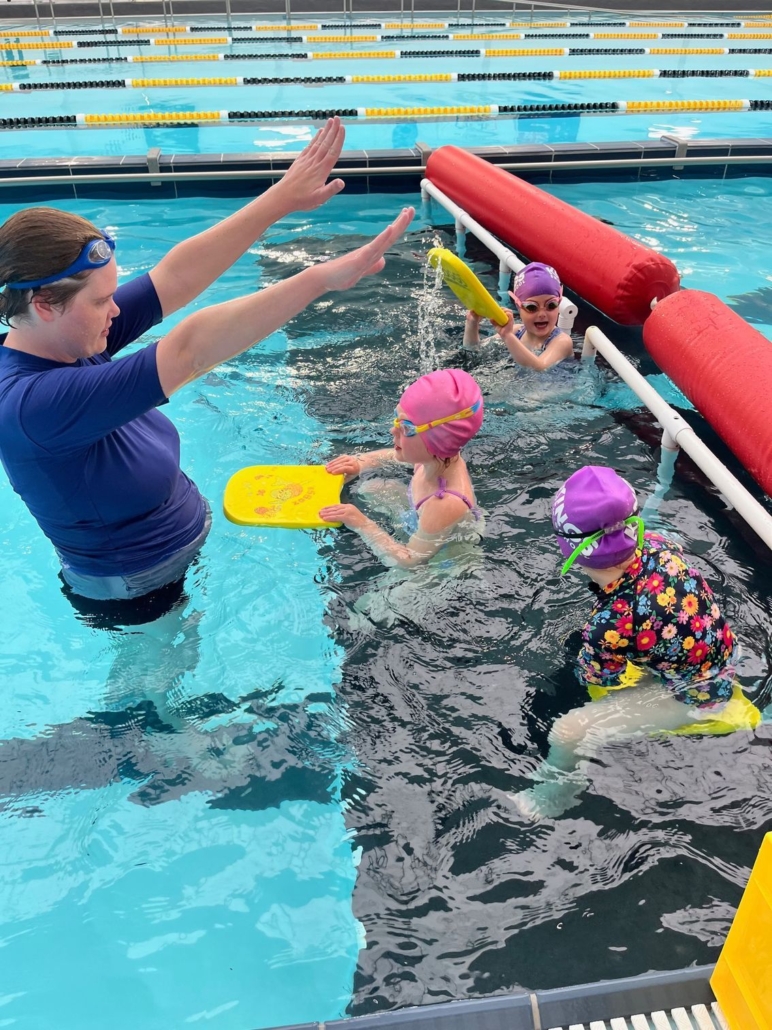
Swimming isn’t just about water safety. Research shows that children who start swimming from a young age develop stronger motor skills and cognitive abilities. Here’s what that actually means for your child.
As parents, we hear a lot about developmental milestones. From Plunket visits to early childhood teachers to your GP, the conversation often comes back to the same question: is your child hitting their key physical and cognitive milestones?
What many parents don’t realise is that swimming is one of the most effective activities for supporting that development, across multiple areas, from a very young age.
What Are Motor Skills, and Why Do They Matter?
Motor skills fall into two categories, and both are actively developed in the water.
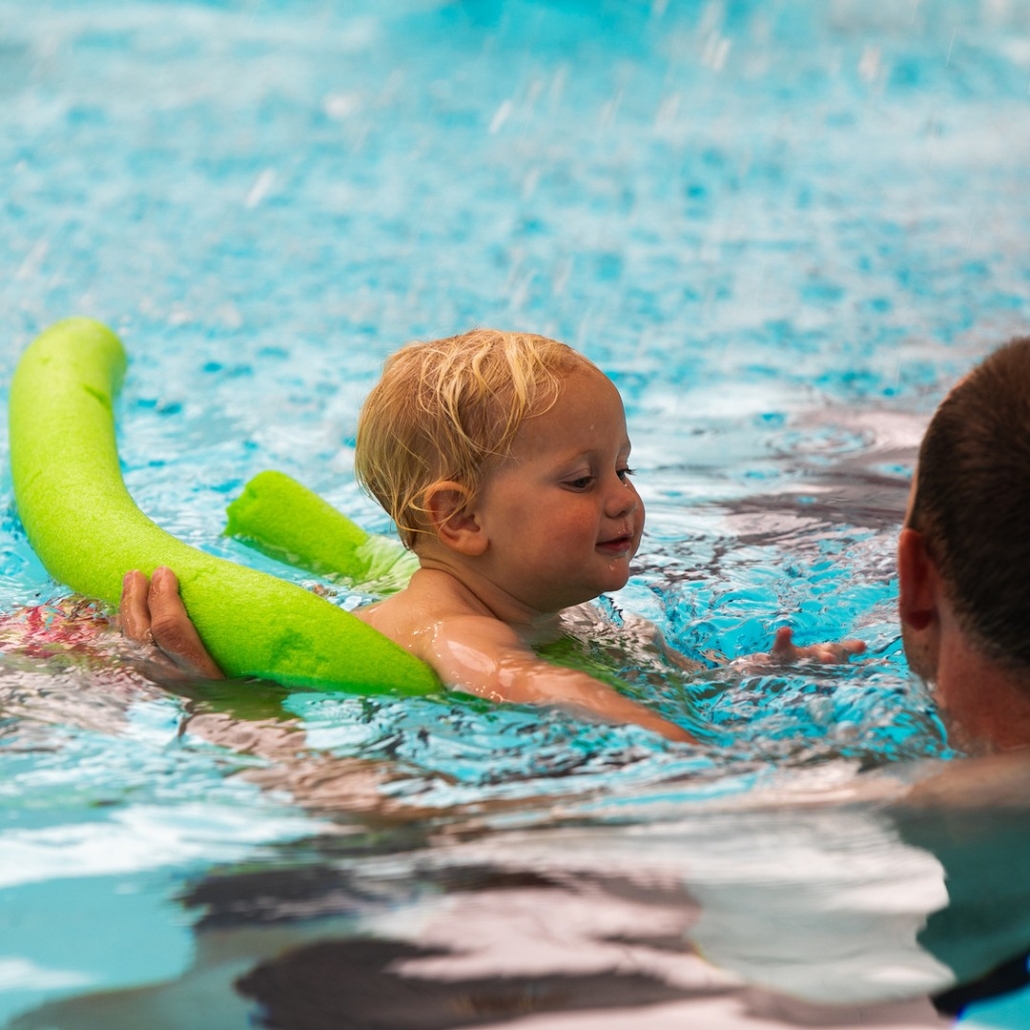
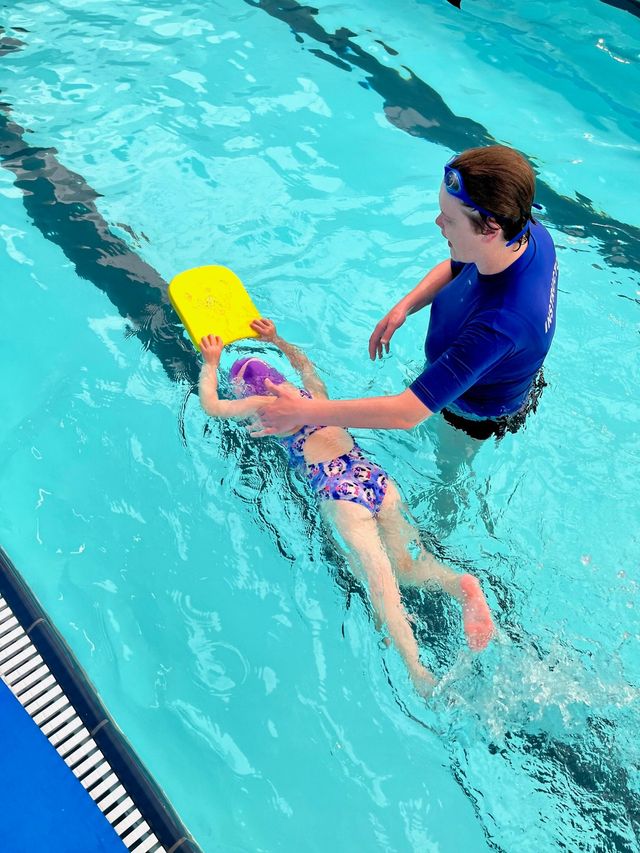
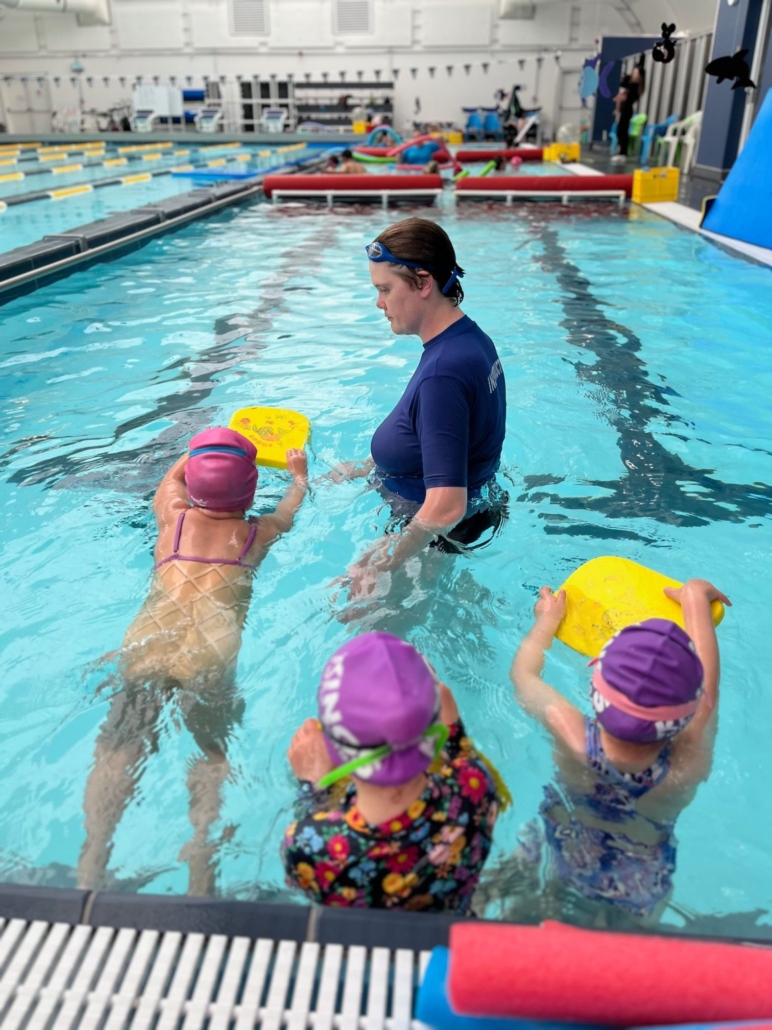
Gross motor skills are movements using the large muscles of the body. For young swimmers, that looks like:
- Kicking through the water
- Moving arms in a swimming motion
- Rolling from front to back
- Floating independently
- Turning around in the water
- Climbing out of the pool
These are the big, whole-body movements that build strength, coordination, and body awareness. In the pool, children practise these skills in a supported, low-impact environment where buoyancy helps them move in ways they can’t yet manage on land.
Fine motor skills are the smaller, more precise movements, usually involving the hands and fingers. In the pool, that includes:
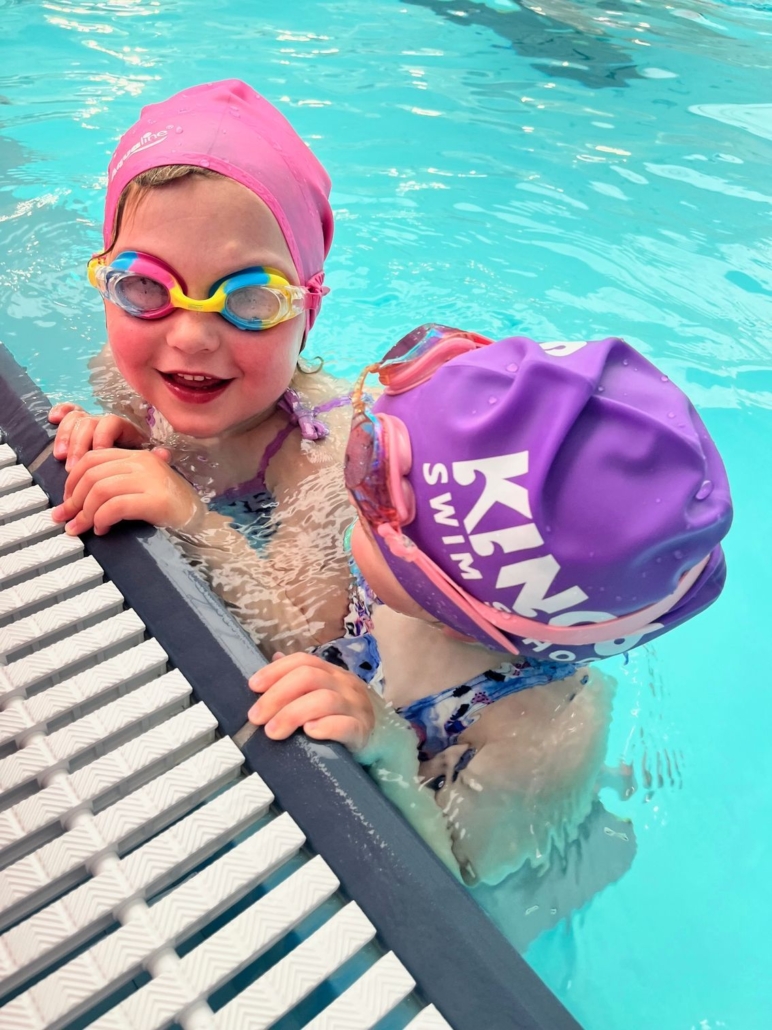
- Gripping the pool edge
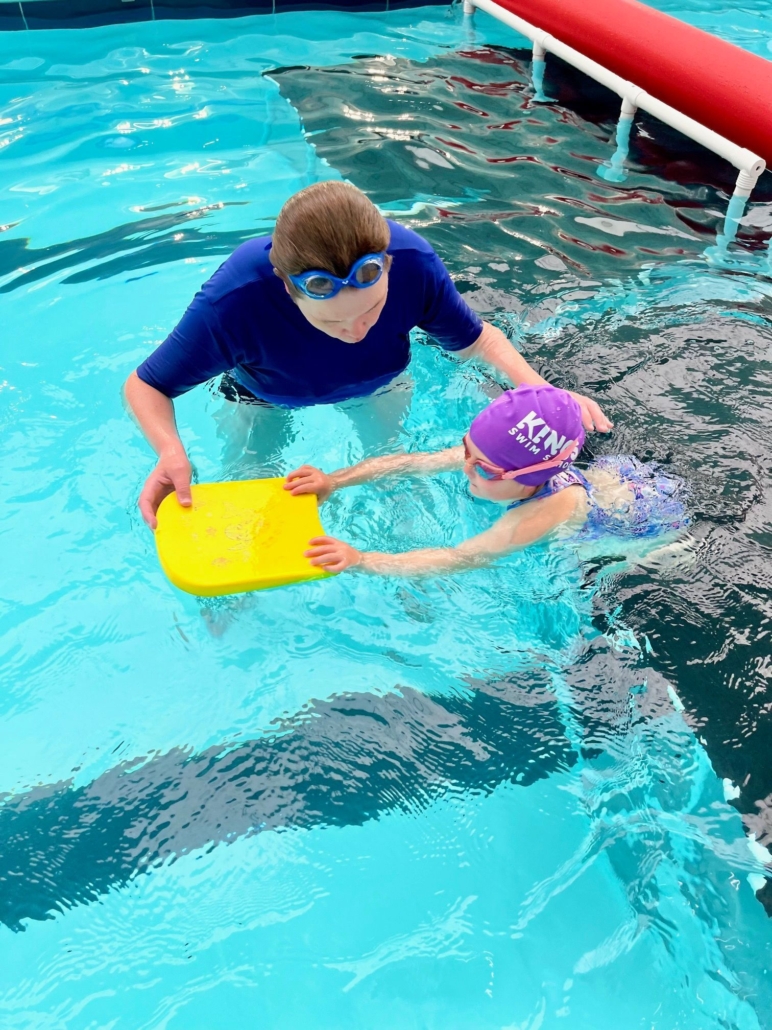
- Reaching for and grasping objects
- Holding and manipulating toys in the water
- Coordinating hand movements during activities
These skills are the foundation for everything from writing to getting dressed to using cutlery. The water provides a unique environment for developing hand-eye coordination and grip strength while children are engaged and having fun.
Swimming and Cognitive Development
Motor skills are only part of the picture. Swimming also supports cognitive development: how your child thinks, learns, processes information, remembers, problem-solves, and understands their environment.
Every swimming lesson asks a child to:
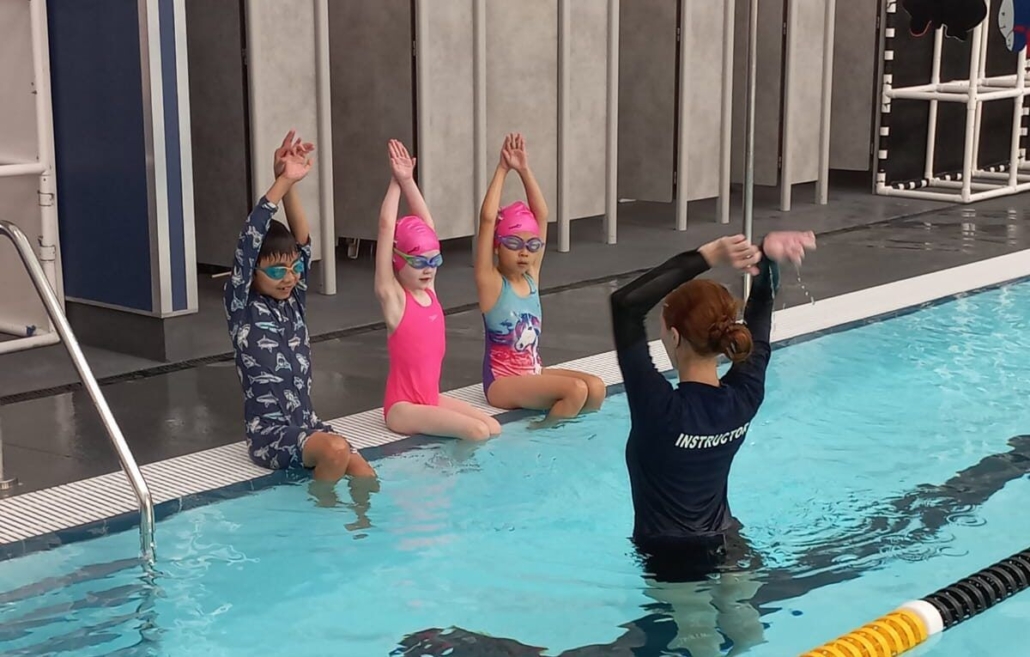
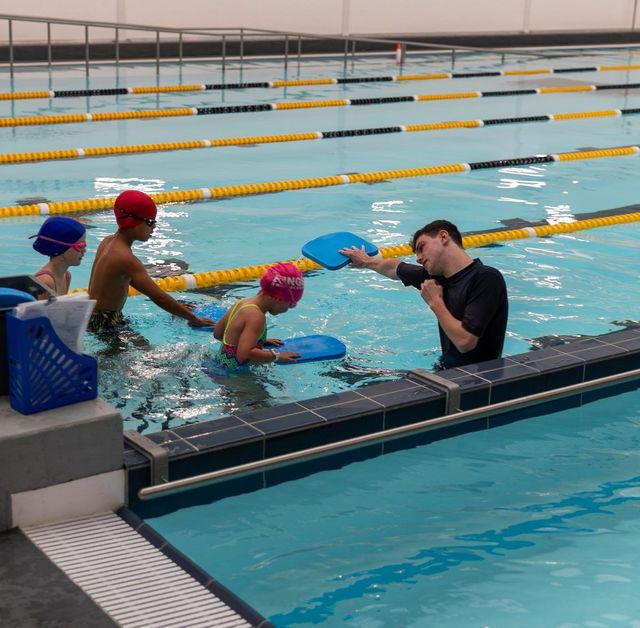
- Listen and respond to instructions from their teacher
- Remember a sequence of movements (kick, then reach, then breathe)
- Understand cause and effect (if I kick harder, I move faster)
- Make decisions in the water (which way do I need to go?)
- Recognise where the pool edge is and work out how to get there
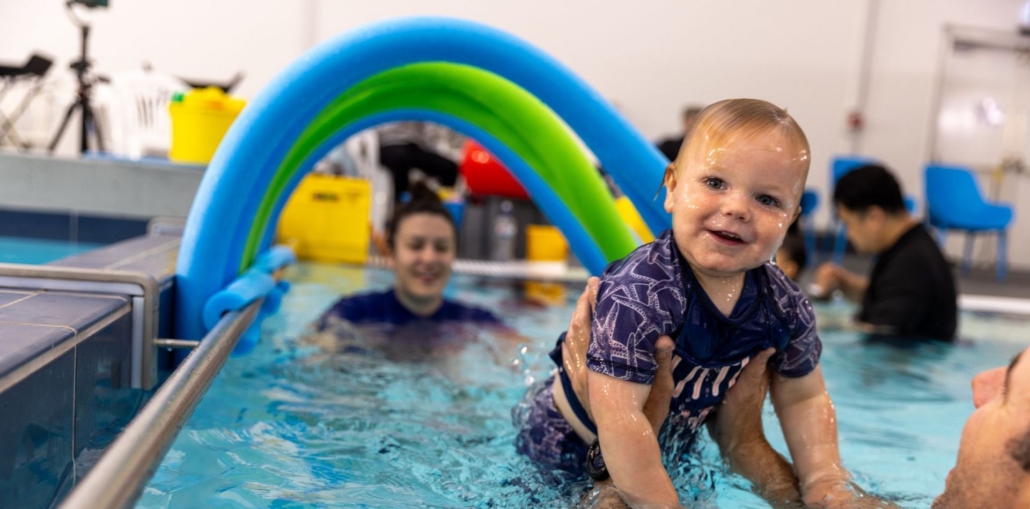
For babies and toddlers especially, this kind of multi-sensory learning is incredibly valuable. They’re processing new physical sensations, responding to verbal cues, and building spatial awareness, all at the same time.
What Does the Research Say?
A landmark four-year study by Griffith University surveyed parents of 7,000 children under five across Australia, New Zealand, and the United States, and independently assessed 177 children using internationally recognised testing methods. The findings were striking: children who participated in early-years swimming were reaching developmental milestones well ahead of the normal population, across cognitive, gross motor, and fine motor development, as well as language, literacy, and numeracy.
Lead researcher Professor Robyn Jorgensen found that swimming children were anywhere from six to 15 months ahead of their peers in cognitive skills, problem-solving, counting, language, and following instructions. Most remarkably, children scored 17 months ahead in story recall and 20 months ahead in understanding directions. These benefits held true regardless of socio-economic background or gender.
This isn’t surprising when you consider what happens in a swimming lesson. A child is simultaneously listening, moving, problem-solving, and building confidence in an unfamiliar environment. That combination of physical and mental engagement is exactly what developing brains thrive on.
How Kings Swim School Builds Development Into Every Lesson
At Kings Swim School, our programme was developed in collaboration with child development specialists specifically to support these key milestones. Every level, from Cuddlefish (babies from 3 months) through to Tiddler (4-5 year olds swimming independently), is carefully sequenced to build cognitive, gross motor, and fine motor skills alongside water confidence.
Our dedicated learn-to-swim pool is heated to 33.5 degrees, creating a warm, comfortable environment where babies and young children can focus on learning rather than adjusting to cold water. Our teachers complete 30-40 hours of training before they teach their first class, including specific preparation in child development and age-appropriate teaching techniques.
That means when your child is in the pool at Kings, every activity has a developmental purpose behind it, even when it looks (and feels) like pure fun.
When Should Your Child Start Swimming?
The short answer: earlier than most parents think. Classes at Kings start from 3 months old, with a parent in the water. At this age, babies are developing foundational skills like breath control, water familiarisation, and basic kicking and reaching movements that support both gross and fine motor development.
The earlier children are introduced to the water, the more comfortable and confident they become, and the more time they have to develop the physical and cognitive skills that swimming uniquely supports.
Give Your Child a Developmental Head Start
Kings Swim School offers classes for babies from 3 months through to adults, at our purpose-built facility in Wigram, Christchurch. With new teaching capacity now available for babies and preschoolers, there’s never been a better time to start your child’s swimming journey.
Book a class or find out more:
Book a class or find out more by viewing our pathways and levels at Kings Swim School.